Dosing a beverage run is arithmetic, but it is arithmetic that goes wrong when one of the inputs is assumed rather than read.
You need three numbers. The target dose per unit, in milligrams. The number of units in the batch. And the concentration of the emulsion you are adding, in milligrams per millilitre, taken from the certificate of analysis for the lot you are using, not from a spec sheet.
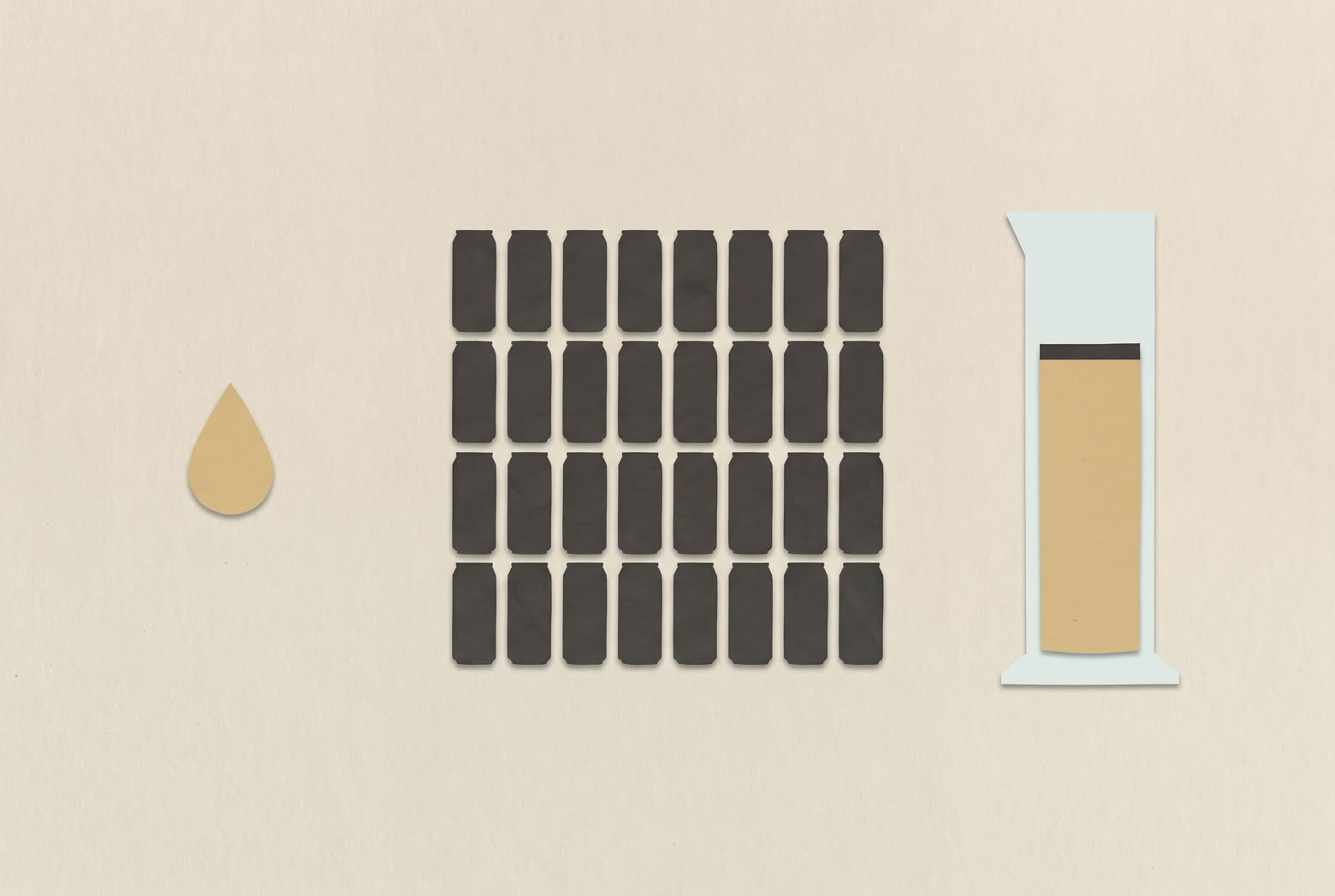
Multiply dose by units to get the total cannabinoid the batch must carry. Divide by the lot concentration to get the volume of emulsion to add. A ten-milligram dose across ten thousand cans is one hundred grams of cannabinoid; at a concentration of one hundred milligrams per millilitre that is one litre of emulsion.
Two habits keep this honest. First, use the lot concentration every time. Emulsion lots vary slightly, and a rounding assumption compounds across a large run. Second, weigh the emulsion rather than measuring it by volume where you can, and convert with the density on the certificate. A scale is more repeatable than a graduated vessel.
A supplier who is confident in their emulsion will not ask you to add extra to cover losses. If the emulsion resists scalping and stays dispersed, the batch dose is the label dose. That is a much easier position to defend to a regulator than one built on overage.