
Draft: dotted-underlined values are placeholders. Turn this off in assets/js/site.js?v=104 before launch.

The science behind Vault Emulsion

Most emulsions are formulated for one set of conditions. Lower the pH, add solids or salts, or extend storage time, and they separate. Vault Emulsion is formulated to stay stable across all of these.

Why infused drinks lose potency

Cannabinoids are oils, and most beverages are water. Without a stable emulsion, the oil separates over time. It binds to packaging, rises to the surface, or merges into larger droplets, and measured potency drops the longer the product sits.

Vault Emulsion keeps droplets small and evenly dispersed across pH, solids, and electrolyte levels. In testing, 97% of initial potency remained after 12 months at 77°F.

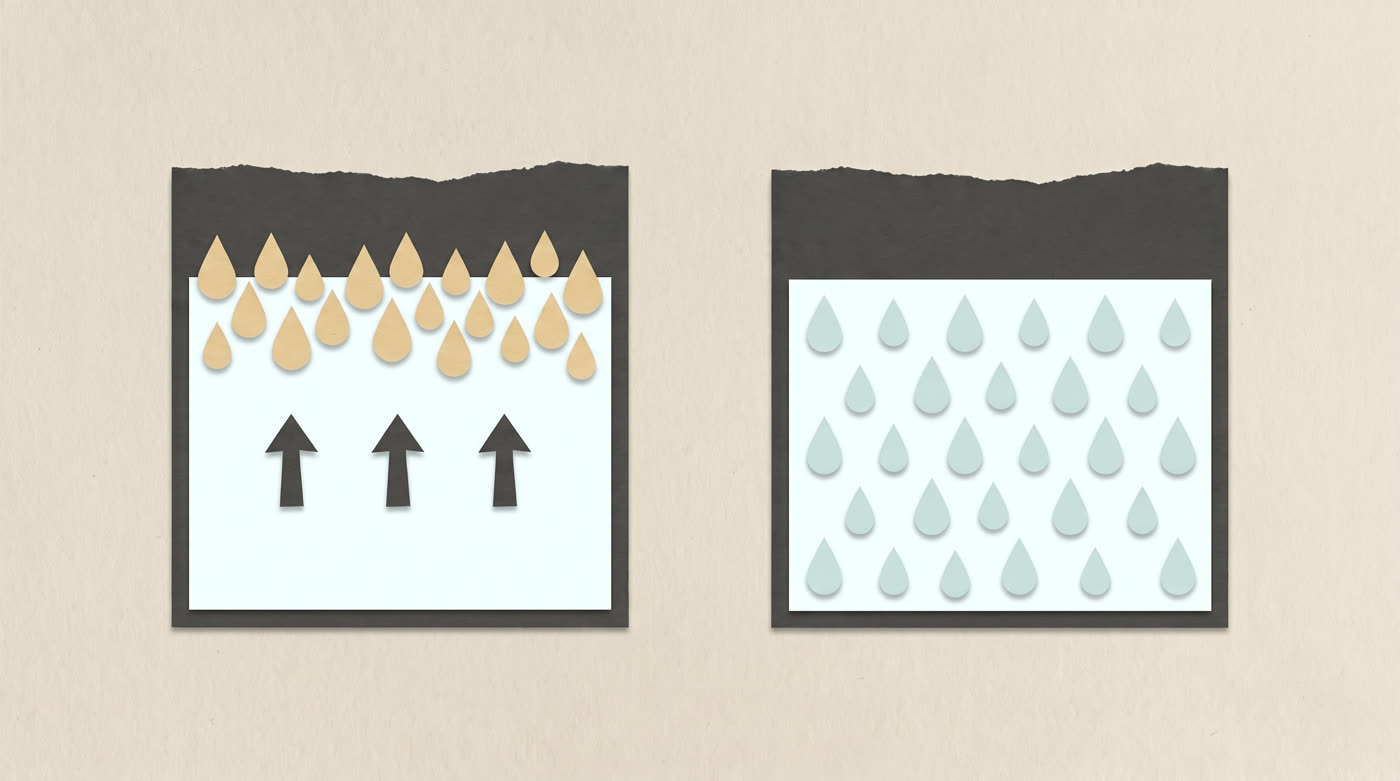
Two bottles. In an unstable emulsion, oil has separated into a layer at the top and a few large droplets. With Vault Emulsion, small droplets stay evenly spread through the liquid.
Illustration of oil separating in an unstable emulsion compared with an even dispersion.

How emulsions fail

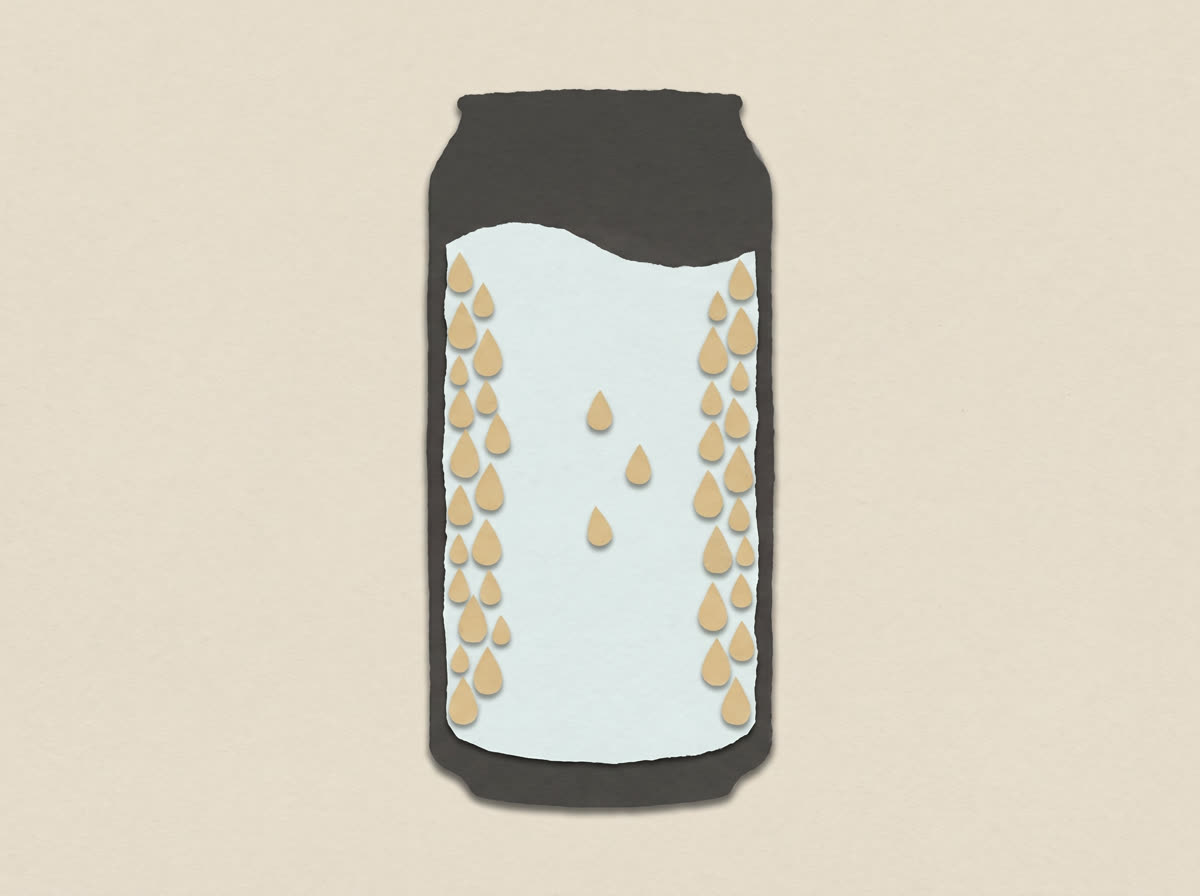
Five mechanisms account for most potency loss in infused beverages. Each one starts with droplets that are too large, too varied in size, or not held apart.

  • Scalping

    mode scalping

    Cannabinoid is absorbed by can liners, bottles, and closures.

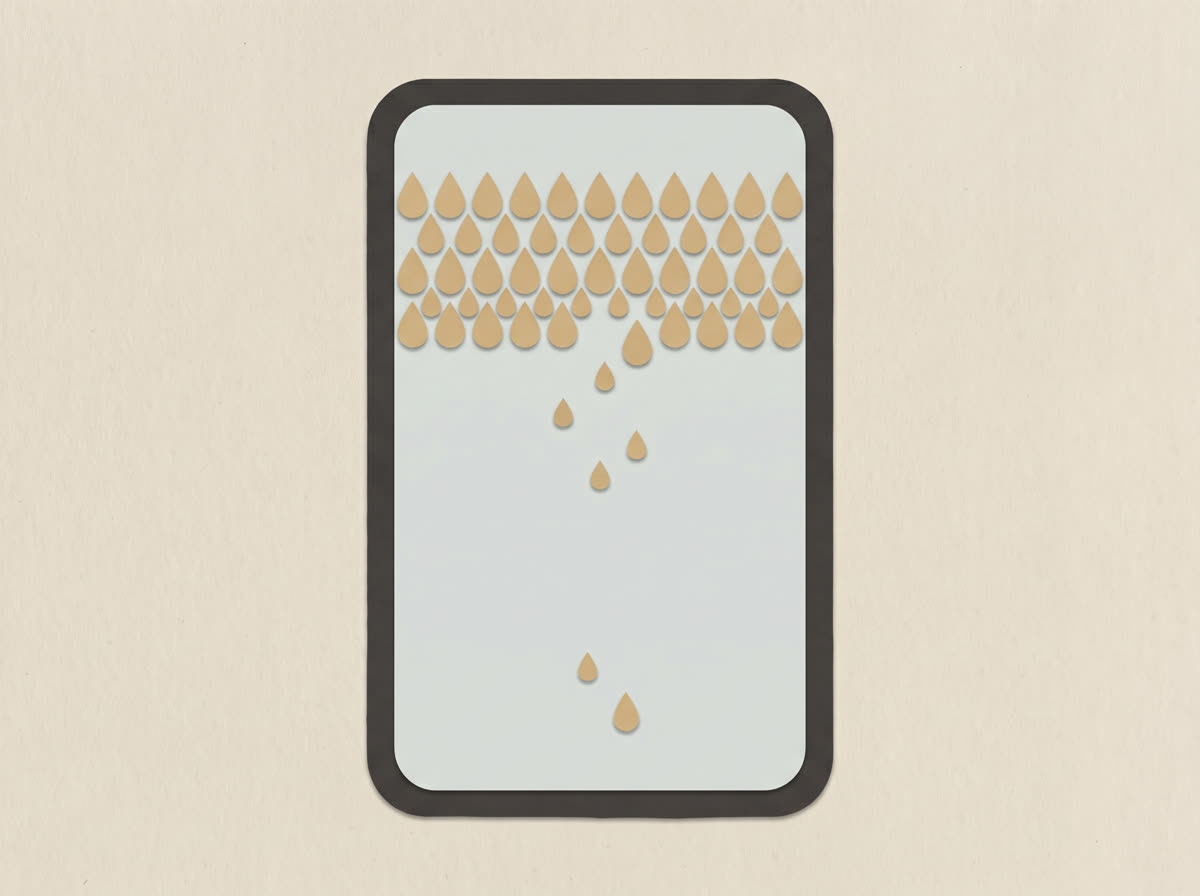
  • Creaming

    mode creaming

    Droplets rise and concentrate near the surface.

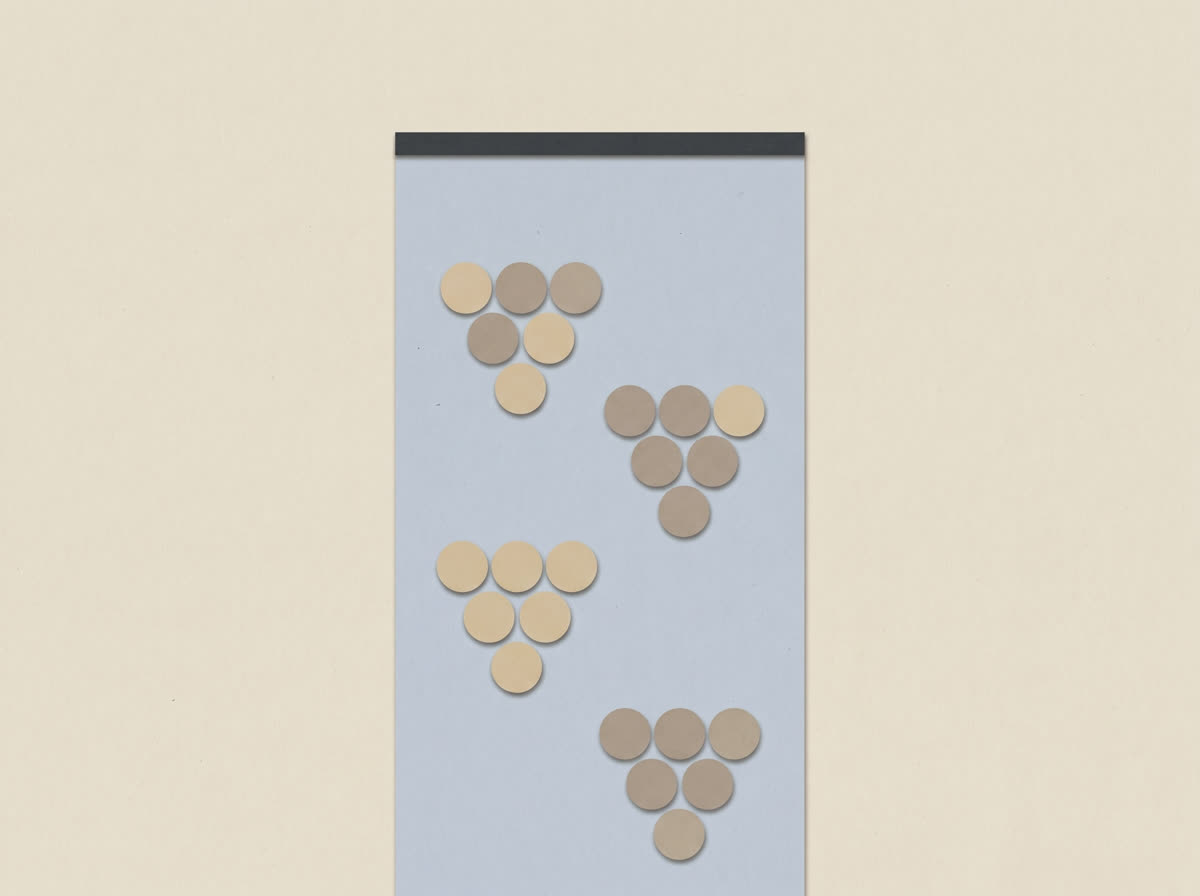
  • Flocculation

    mode flocculation

    Droplets form loose clusters that no longer disperse evenly.

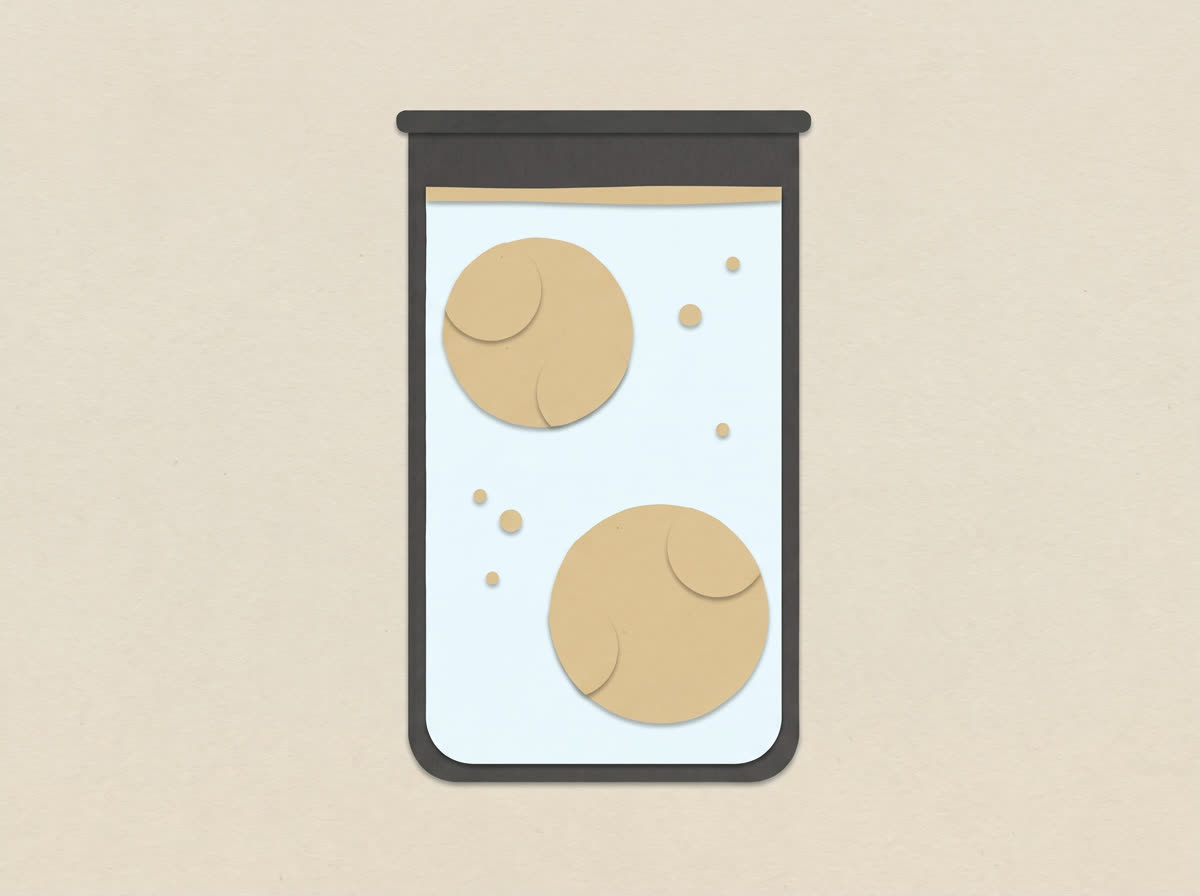
  • Coalescence

    mode coalescence

    Clusters merge into larger droplets and eventually separate as oil.

  • Ostwald ripening

    mode ostwald

    Small droplets shrink as large ones grow, until the emulsion breaks.

Formulation approach

Four design choices do most of the work: how droplets are kept apart, how uniform they are in size, how small they are, and how closely the two phases match in density.

Steric stabilization

Charge-stabilized emulsions rely on electrostatic repulsion between droplets, which acids and salts neutralize. Vault Emulsion uses a physical stabilizing layer around each droplet that prevents contact regardless of pH or ionic strength.


Left: charged droplets lose their charge in acid and salt and merge. Right: droplets with a physical stabilizing layer stay apart.
Charge-stabilized (left) vs. sterically stabilized (right) in the same liquid

Multi-pass high-pressure homogenization

Each pass through the homogenizer breaks up the largest droplets and narrows the size distribution. Large droplets drive creaming and coalescence, so a narrow distribution is central to stability.

Four histograms of droplet size. The spread of sizes narrows with each homogenizer pass.
Pre-mix, pass 1, pass 2, final: the size spread narrows with each pass

Density matching

Oil is lighter than water, so droplets rise. We match the density of the oil phase to the water phase, so buoyancy has nothing to work with and the droplets stay where they are put, in any base.

Left: in an unmatched liquid the droplets rise and collect at the top. Right: with the phases density-matched the droplets stay evenly spread.
Unmatched: droplets cream (left). Density matched: stays suspended (right)

Droplet size target

We target droplets of 150 nanometres and under. At that size gravity and Brownian motion balance, light passes through with little scatter, and there is no large tail of droplets to cream or coalesce.

Droplets drawn to scale, from a micrometre-scale droplet down to the target of 150 nanometres and under.
Drawn to scale: 1 µm, 500 nm, 250 nm, and the ≤150 nm target

In the lab

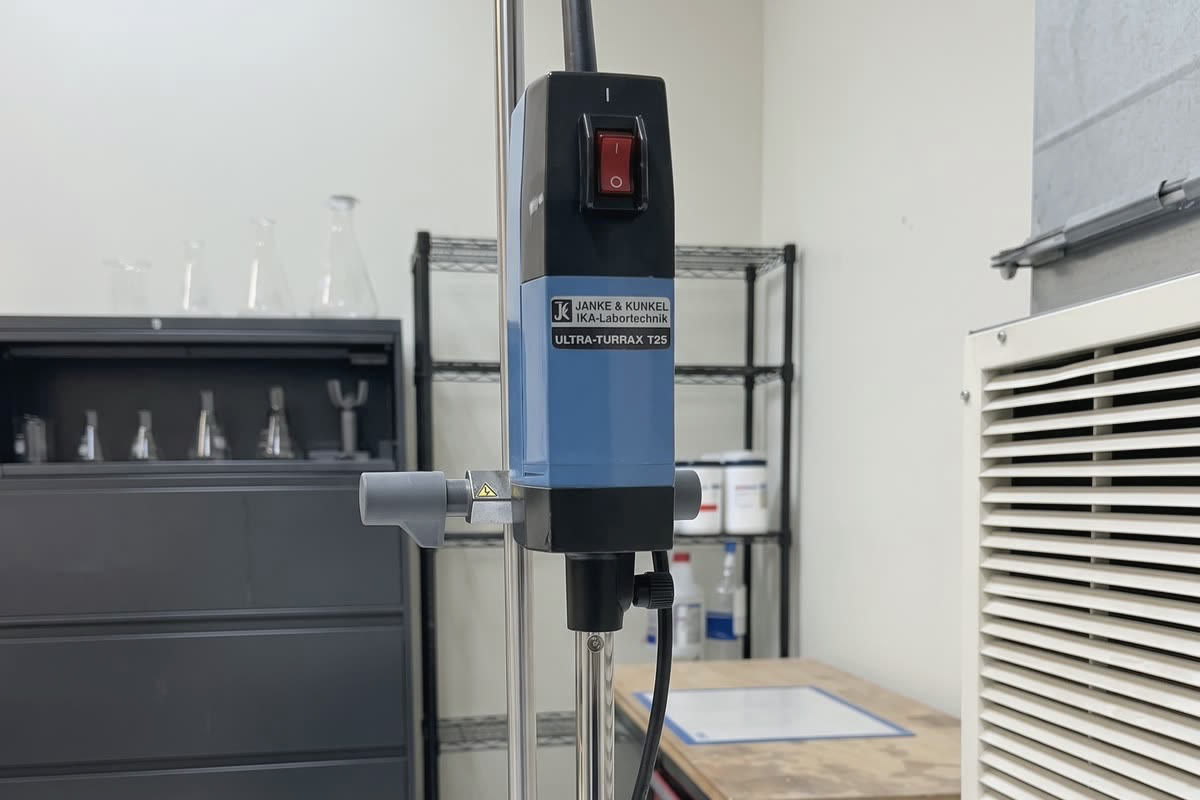
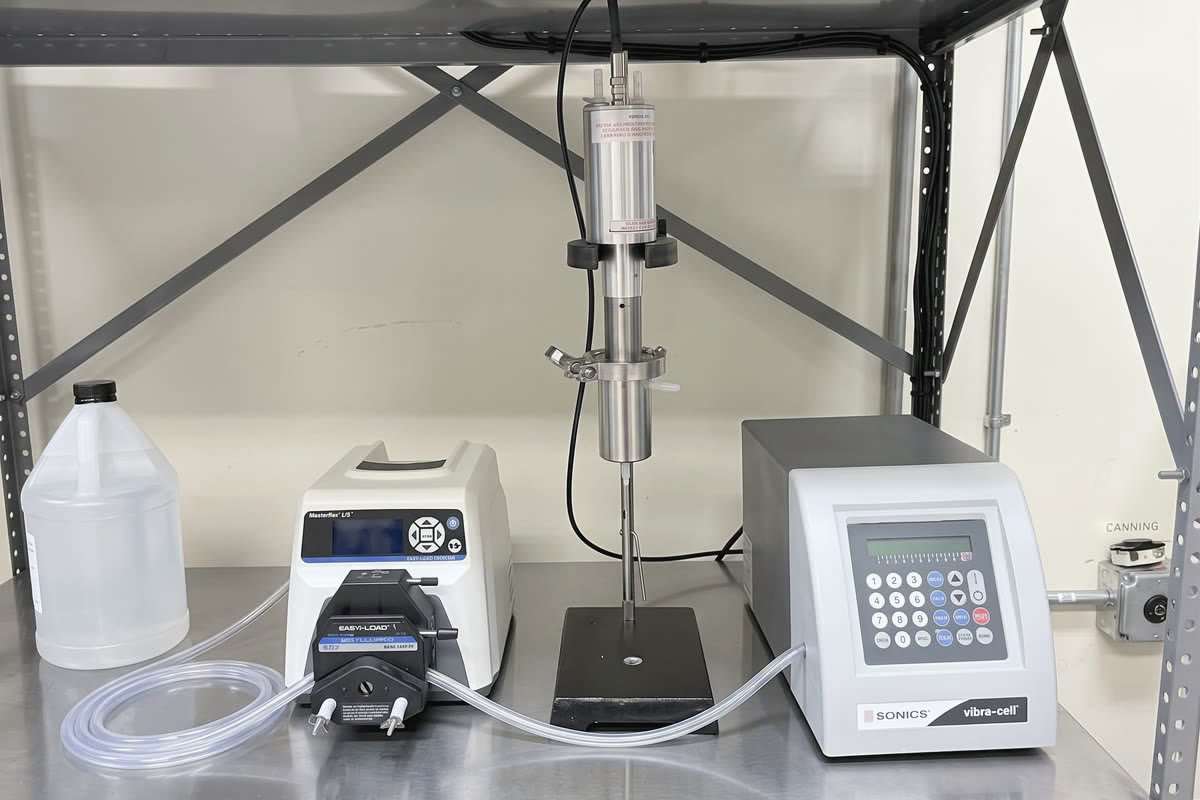
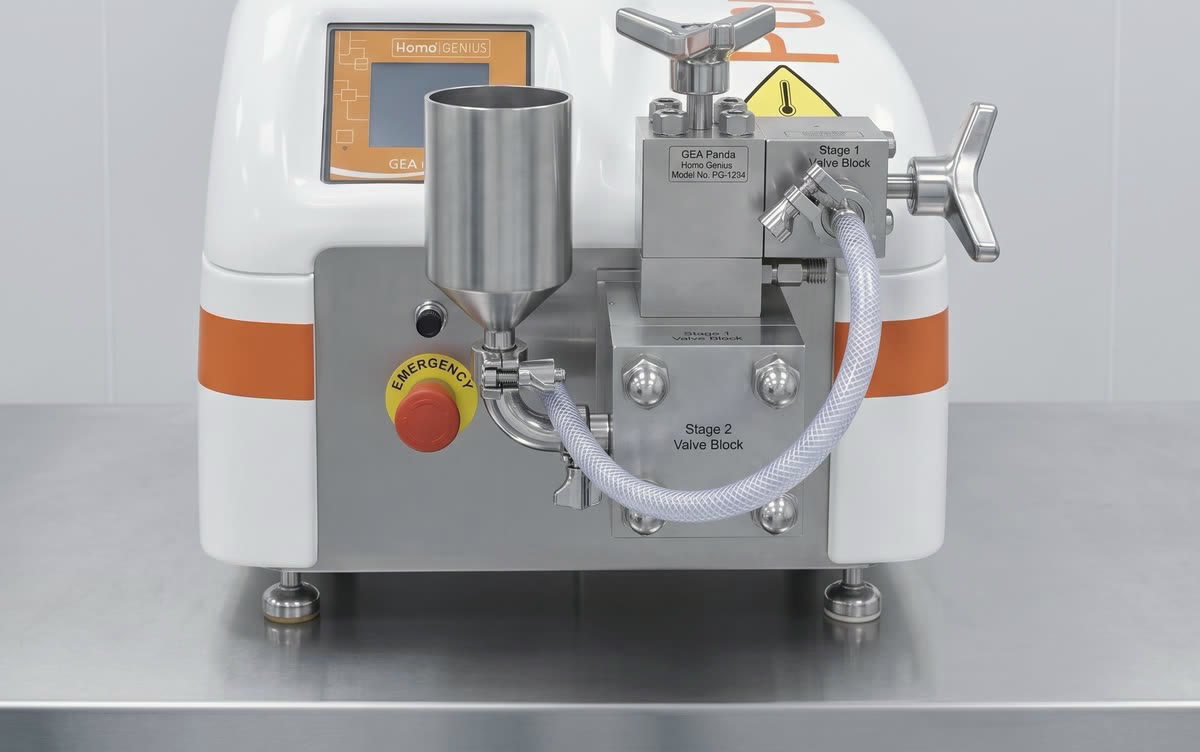
The three stages every batch goes through, from a coarse pre-mix to a finished nanoemulsion.

  • High-shear mixer on a stand in the lab
    1. High-shear pre-mixOil and water phases are combined into a coarse emulsion before size reduction.
  • Ultrasonic processor with a peristaltic pump on a stainless bench
    2. Ultrasonic processingCavitation breaks the coarse droplets down and narrows the size range.
  • Bench-top high-pressure homogenizer
    3. High-pressure homogenizationRepeated passes at high pressure bring every droplet to the same small size.

Test results

Vault Emulsion Concentrate, lot VE-2608, tested by an independent ISO/IEC 17025 lab

97%Potency retainedAfter 12 months at 77°F, in cans
100nmMean droplet sizeNarrow distribution after final pass
2.5–5.5pH range testedNo separation across range
120°FGummy heat toleranceShape held for 8 hours

Figure 1. Potency over 12 months, % of initial

100908070600 mo361297%55%
Vault EmulsionComparison emulsion

Table 1. Stability across beverage conditions, 90 days

ConditionTest basePotency retainedVisualResult
Low pHCitrus, carbonatedLemon seltzer, pH 2.899%No ringPass
High solidsJuice, proteinOrange juice, 12% solids98%No settlingPass
ElectrolytesSports, mineralSports drink, 450 mg Na98%No clumpingPass
DensitySyrupsSimple syrup, 1.3 g/mL97%No creamingPass
Heat cyclingTransportSeltzer, 40–100°F × 1097%No oilingPass

Table 2. Gummy performance

TestMethodResult
Heat tolerance8 hours at 120°FNo deformation or fusing
Dose uniformity30 pieces per batch, HPLC±5% of target
Shelf stability12 months at 77°FPotency and texture within spec

Stable potency means the amount on the label is the amount measured at the end of shelf life. Full methods and lab reports are available on request.

Download the results sheet (PDF)

Includes methods, lab details, and full data tables.

Test it in your base

Let us know what you make, your base requirements, and your dose per serving, and we’ll send samples of what we can do.