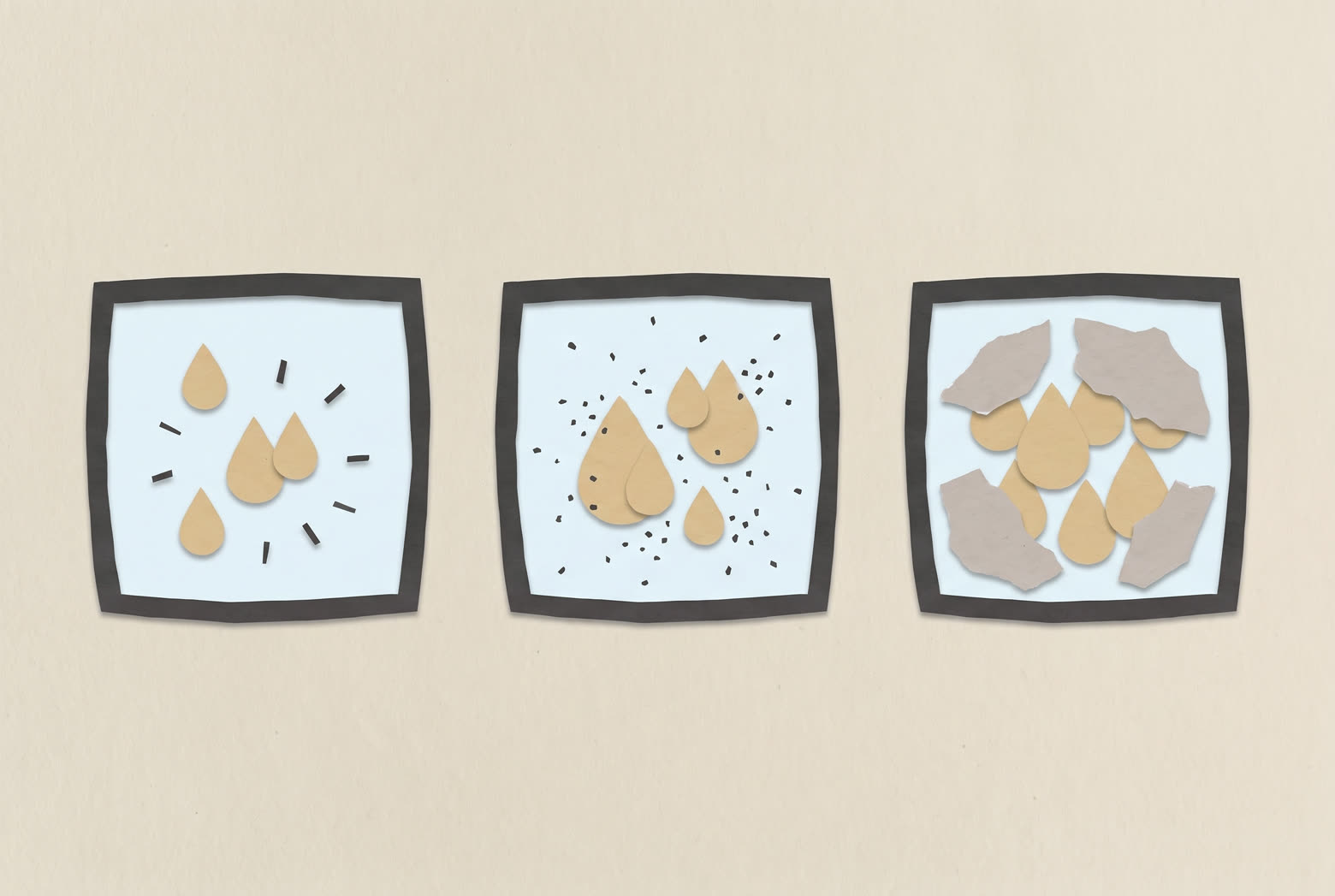
Most emulsions are demonstrated in plain water, and most beverages are nothing like plain water. Three properties of a real base do most of the damage.
Acidity. Seltzers, sodas, juices and most functional drinks sit between pH 2.5 and 4. Emulsions that rely on electrical charge to keep droplets apart lose that charge as the pH drops. Droplets that were repelling each other stop doing so and begin to merge.
Salt. Electrolyte drinks, sports drinks and mineral waters carry dissolved ions. Ions screen electrical charge in the same way acid does. A charge-stabilized emulsion that survives a low pH can still collapse when sodium is added.
Solids. Juice pulp, protein, dairy alternatives and syrups are thick with material that droplets can stick to. Solids also change density, which changes how fast droplets rise or sink.
The way around all three is to stop depending on charge. If each droplet is wrapped in a physical stabilizing layer, the droplets are kept apart regardless of what the surrounding water is doing. That is what steric stabilization means, and it is the single spec worth asking about when a beverage is anything other than still water.
Practical rule: test the emulsion in your finished base, at your pH, with your electrolytes and your solids, for the shelf life you are going to print. Anything less is a demonstration, not a test.